Diversification and alternative export routes help limit the economic impact
The Gulf economy has demonstrated more resilience than some early forecasts suggested, although prolonged disruption around the Strait of Hormuz continues to create significant risks for trade, energy exports and supply chains.
The National reports that the economic shock has become more complicated than a simple oil-price increase. The bigger challenge is the disruption to the movement of energy and goods, alongside higher shipping costs, insurance premiums and supply-chain pressures.
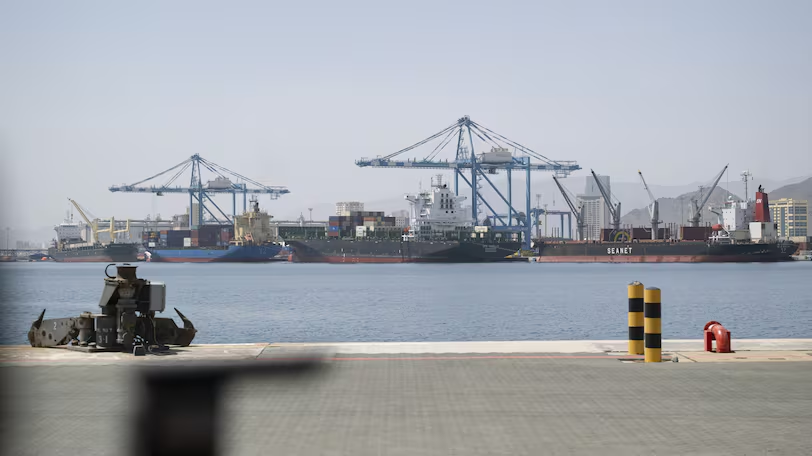
The UAE and Saudi Arabia have benefited from alternative infrastructure that provides some protection against dependence on the Strait.
Saudi Arabia has its East-West pipeline, while the UAE has alternative export infrastructure. These systems provide additional flexibility for energy exports during periods of maritime disruption.
The UAE’s diversified economy also provides support. Its logistics, aviation, tourism and financial sectors mean that economic activity is not entirely dependent on oil production.
However, the longer the disruption continues, the greater the potential impact on investment decisions, consumer confidence, transportation costs and international trade.
The medium-term outlook remains more optimistic, with forecasts pointing toward stronger growth if energy exports and regional transportation networks return toward normal conditions.
For Gulf businesses, the situation highlights the importance of supply-chain diversification, alternative logistics routes and stronger regional infrastructure.
Source: The National, 15 August 2026.