The United Arab Emirates has officially defended its recent exit from OPEC and OPEC+, calling the move a strategic decision aimed at accelerating investment, industrial growth, and long-term economic resilience.
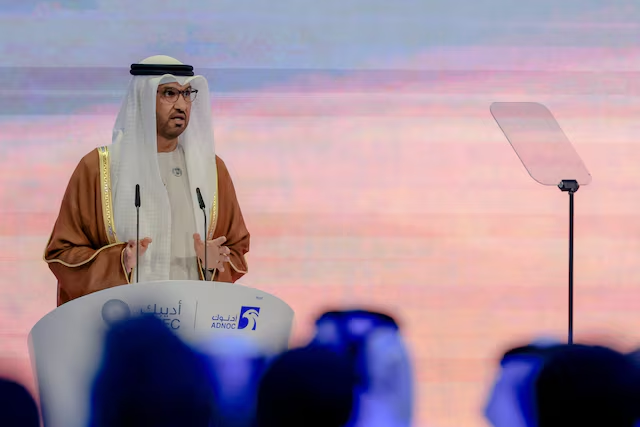
Speaking on May 4, ADNOC CEO Sultan Al Jaber emphasized that the decision was “not directed against anyone” but designed to prioritize national interests and enable greater flexibility in global energy markets.
The UAE formally exited the oil cartel on May 1 after nearly six decades of membership, signaling a major shift in Gulf energy strategy. The move allows Abu Dhabi to expand production capacity and pursue more aggressive global investments without cartel constraints.
From a business perspective, the decision reflects a broader transformation in the UAE’s economic model. Rather than relying solely on oil price coordination, the country is focusing on industrial expansion, AI-driven growth, and sovereign investment strategies.
Economically, the move could reshape global energy markets by weakening OPEC’s coordinated influence while strengthening the UAE’s position as an independent energy and investment powerhouse.
Looking ahead, analysts expect the UAE to significantly increase capital deployment across global energy, infrastructure, and technology sectors, positioning itself as a more flexible and competitive player in a rapidly evolving energy landscape.
Source : Reuters.